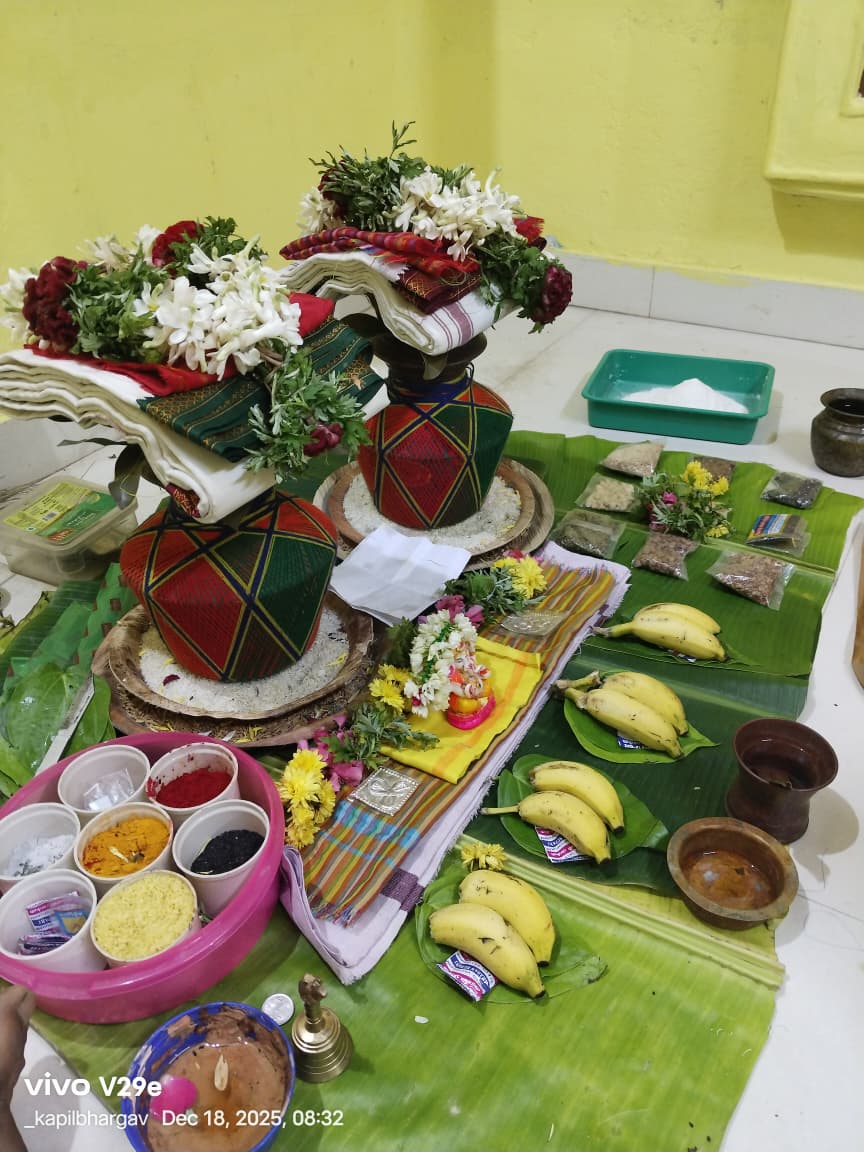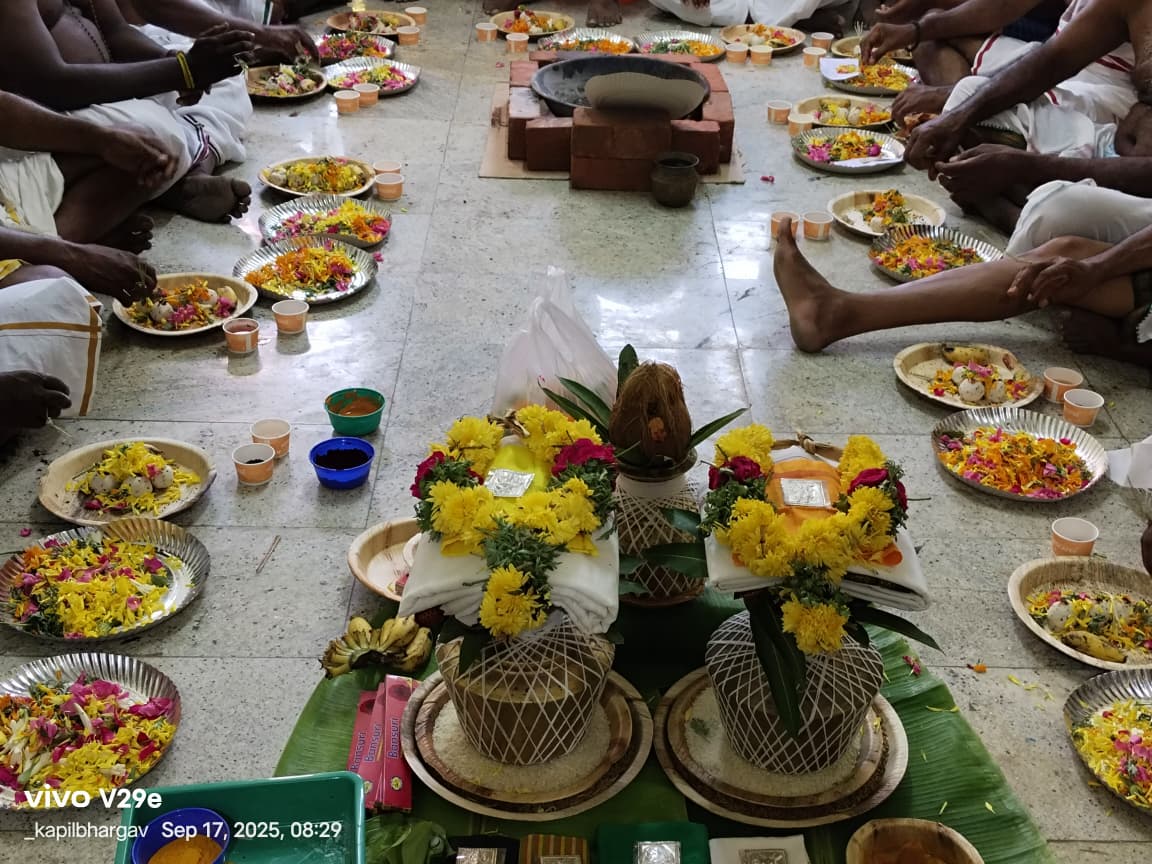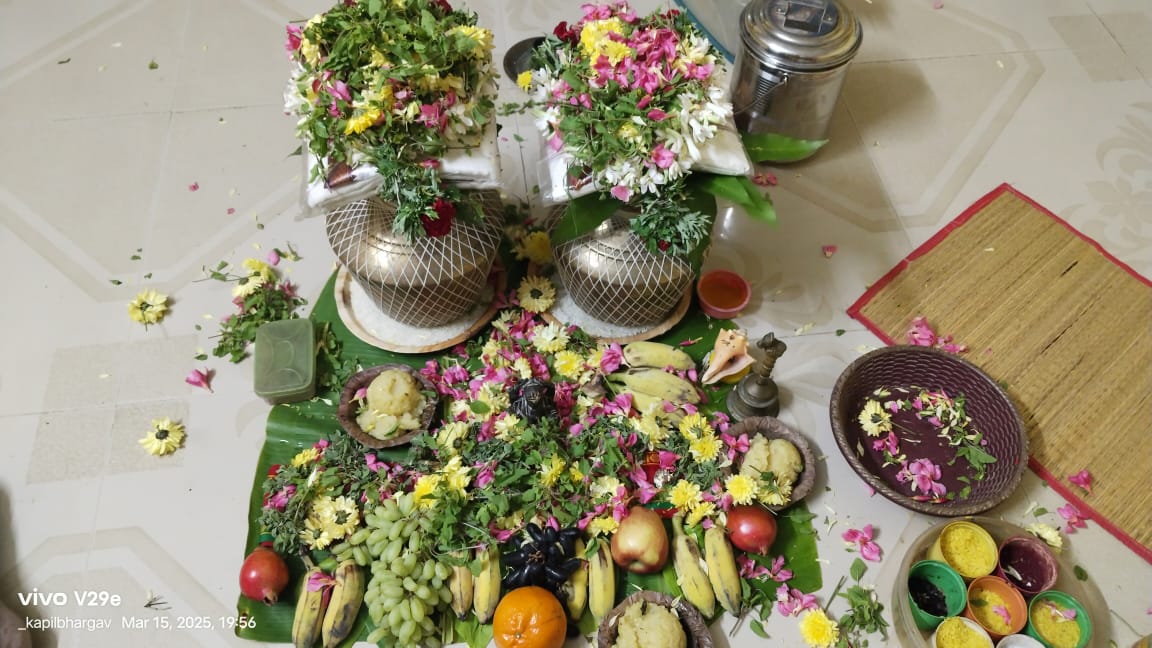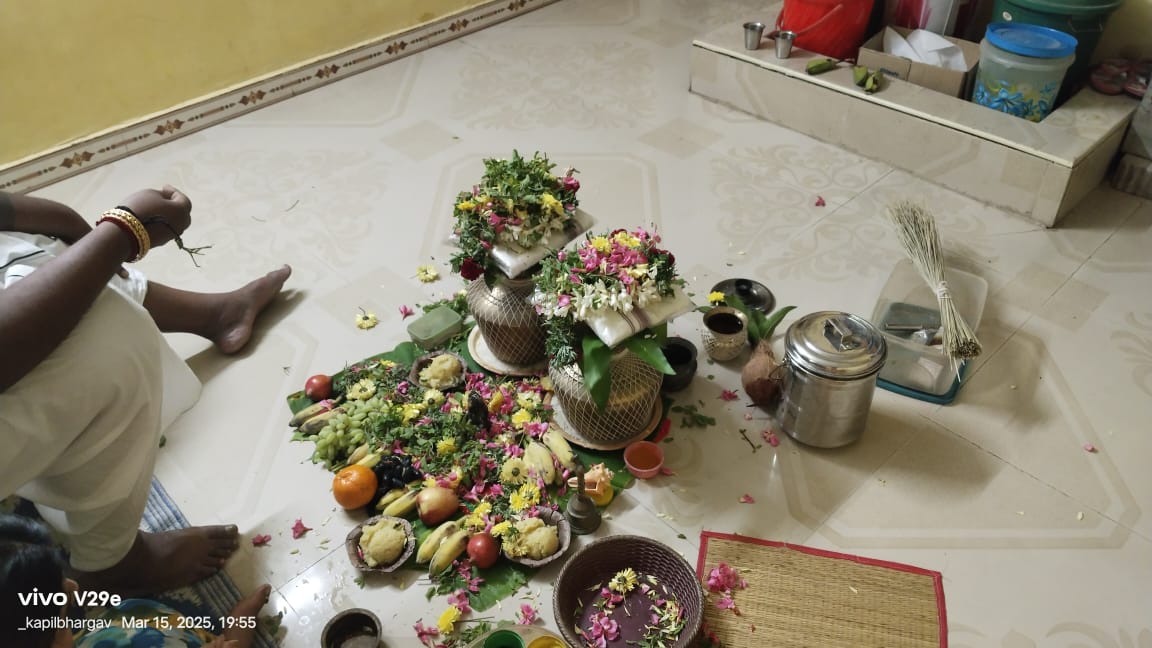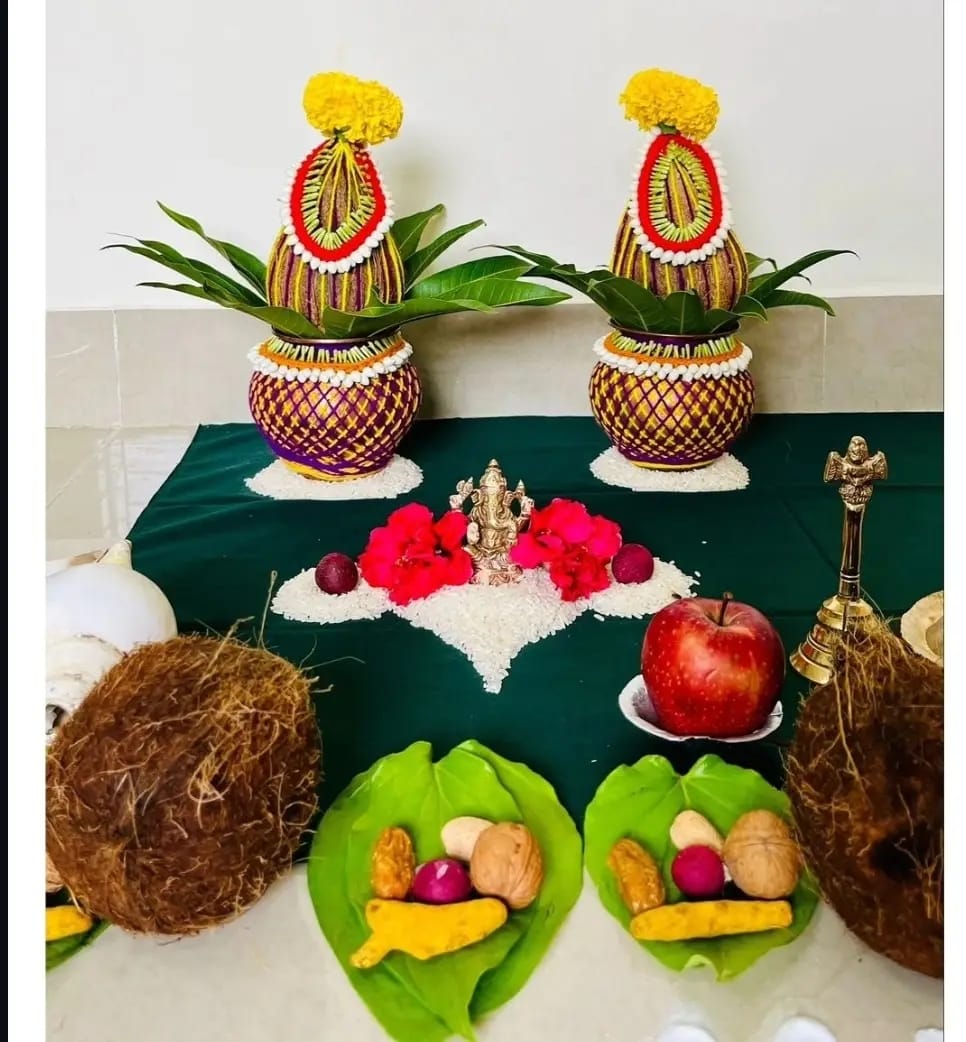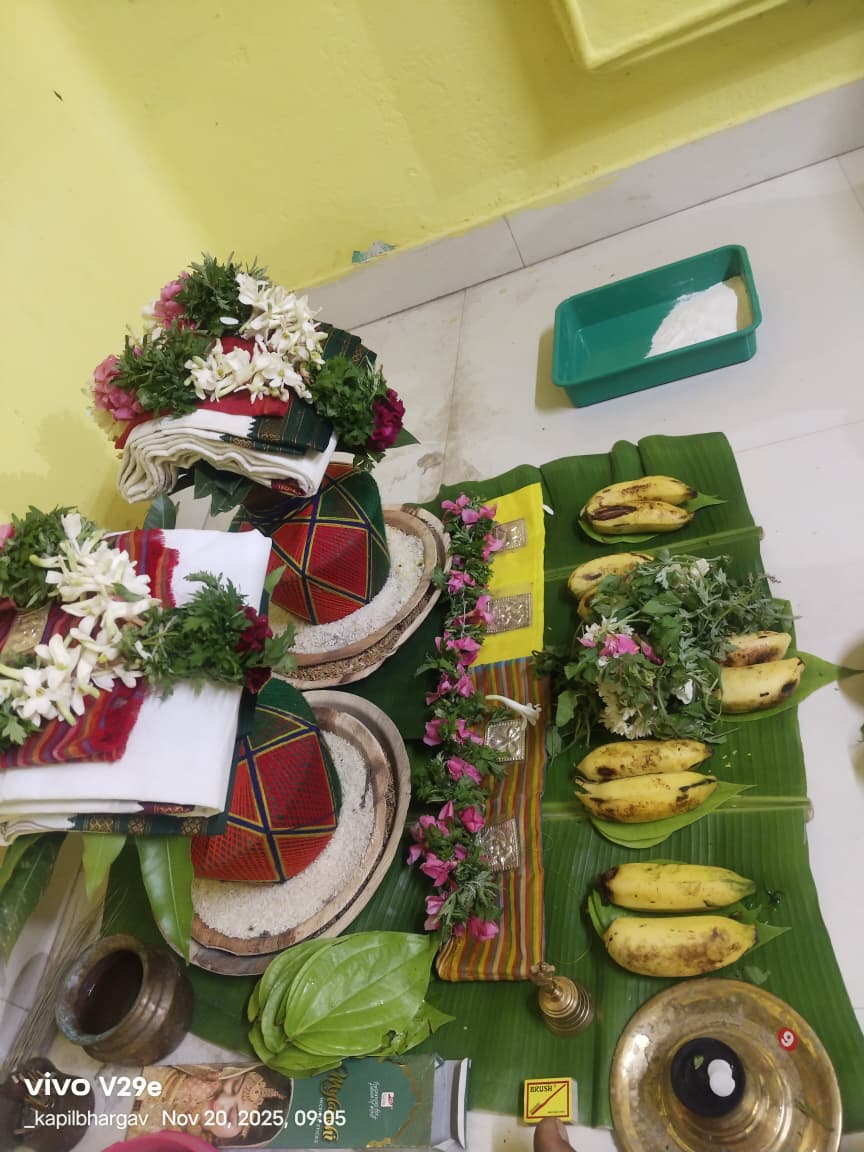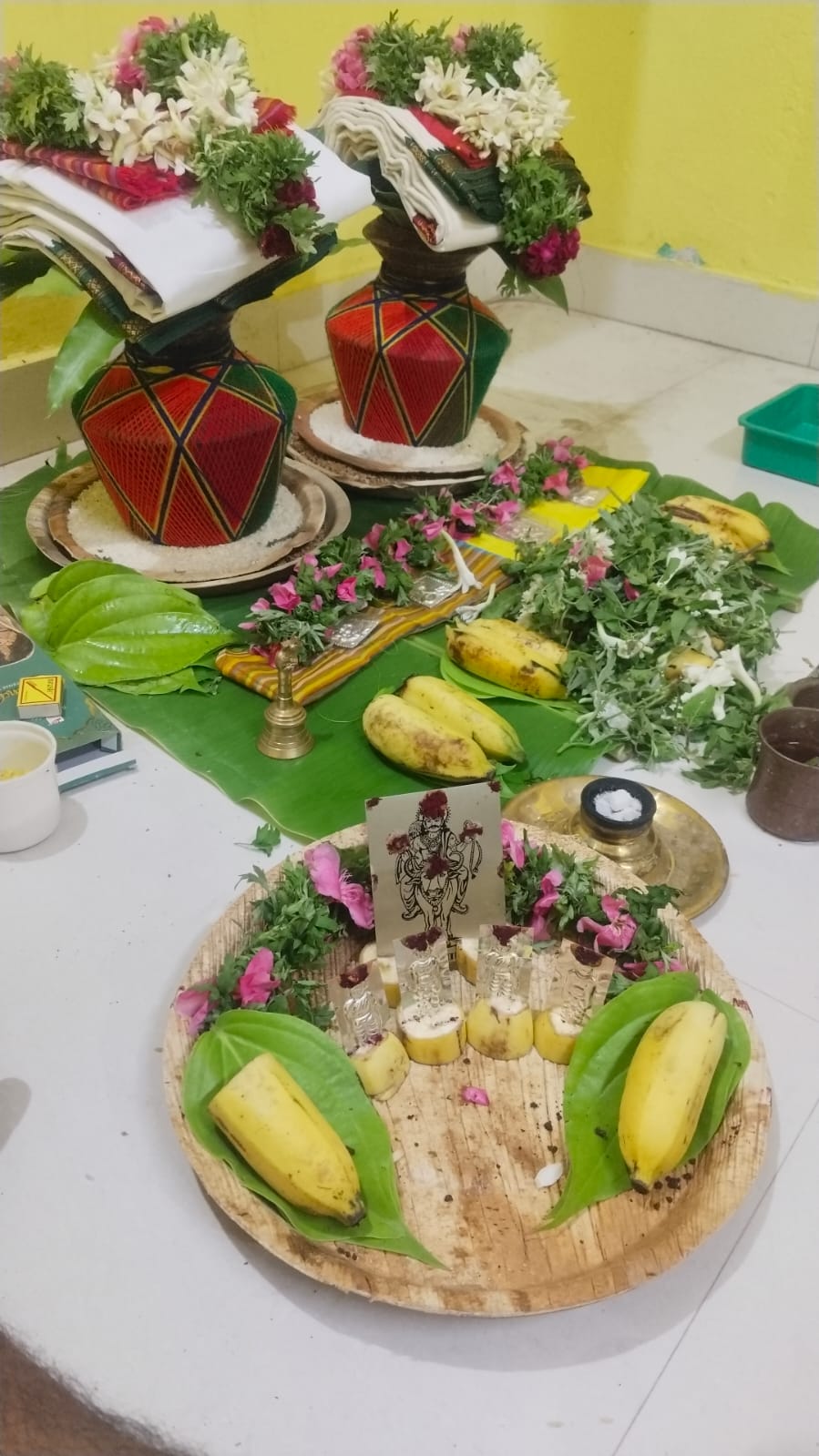
In thilahoma, We do begin with the Ganesh Puja, in order to overcome all the obstacles and to attain Kaarya Siddhi as well as its benefit.
The person performing this puja should recite the Names, Nakshatra and Rashi of his whole family and pray to fulfill their benefits through which the puja is performed.
In this pooja, we worship Lord Varuna and sprinkle kalasha theertha for the sake of the purity of our mind, body and the puja surroundings.
First, we do pooja for Lord YamaDharma Raja in a Silver Bimba. Then, in his shrine, the worshiper recites the names of the deceased ancestors in his family and invokes their souls in male and female forms.
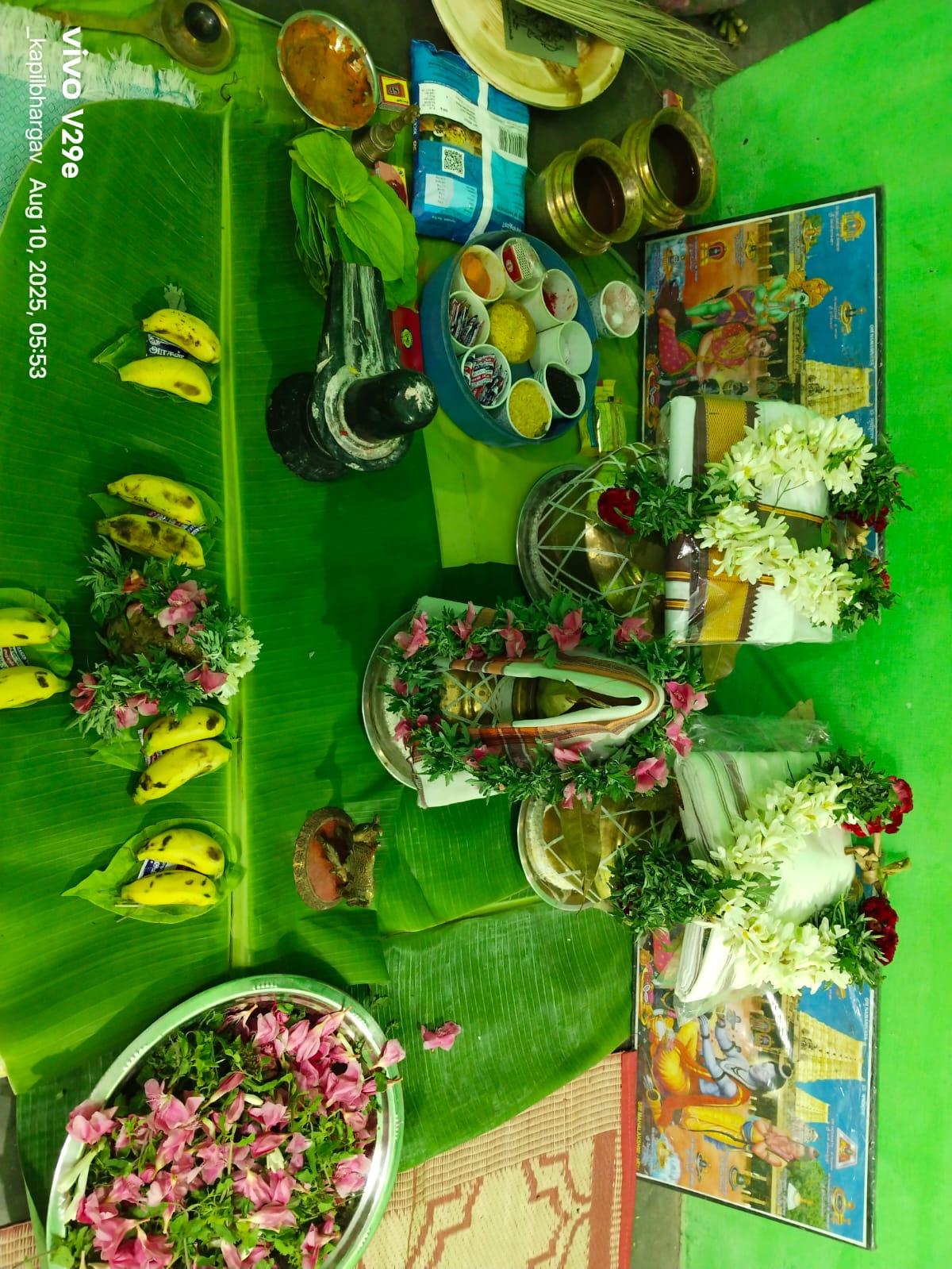
Inviting and performing pooja for Lord Vishnu&Lakshmi, Lord shiva & Parvati, Lord Adisheshar, Lord Shani Bhagvan, Lord Atharvana Bathirakali & Lord Kamadenu.
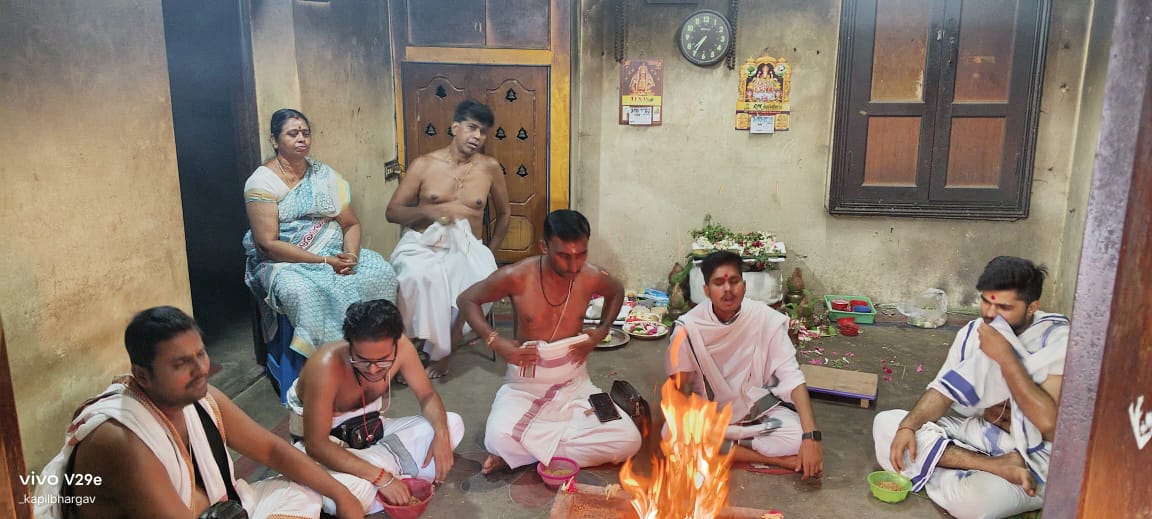
Vedic Pandits chant veda mantra for getting divine grace to the devotees.
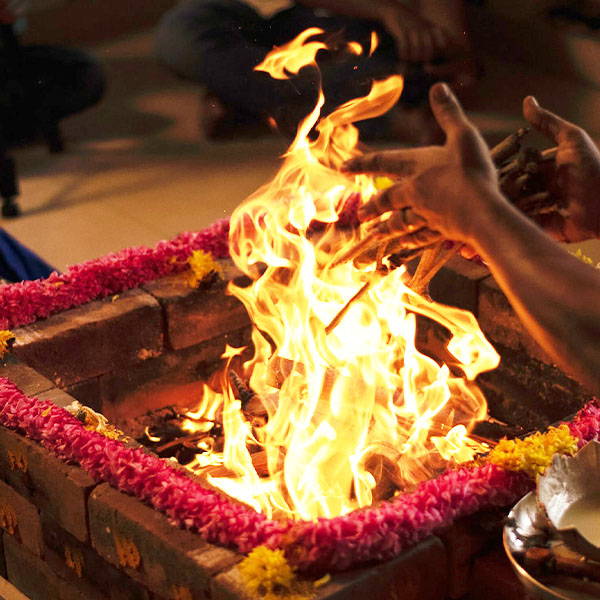
This Homa part is the crucial part of the whole process. To conduct Homa part, we need more pandits depending upon its “Aavarthi”. Aavarthi means counting system of all Homa mantras upto a specific number of times like 1000, 3000, etc. Generally, the most common method is, to do with 6 to 8 pandits for doing 1000 Aavarthi of Thilahoma.
If there have been more deaths like accident or suicide happened in the family, we will have to do more Aavarthi. And also if Astrologers already prescribed any specific count for certain benefits, we need required number of pandits as follows.
1. For 1000 Aavarthi, 6 to 8 pandits
2. For 3000 Aavarthi, 10 to 12 pandits
3. For 6000 Aavarthi, 12 to 16 pandits
4. For 12, 000 Aavarthi 16 to 18 pandits
5. For 24, 000 Aavarthi 20 and 24 pandits
We are supossed to do this pinda karma at the final part of Thila homa. Offering Pinda karma makes our ancestors to get satisfied by this pooja process and also through which, we show our gratitude to whole 21 generation of our ancestors.
Pandit ji do kalasha-abisheka and give pooja prasadham to the Devotees. At this time, the pooja dakshina is given to Pandit and complete the whole ritual process.